GLOW Before and After: The Three-Month Photo Set
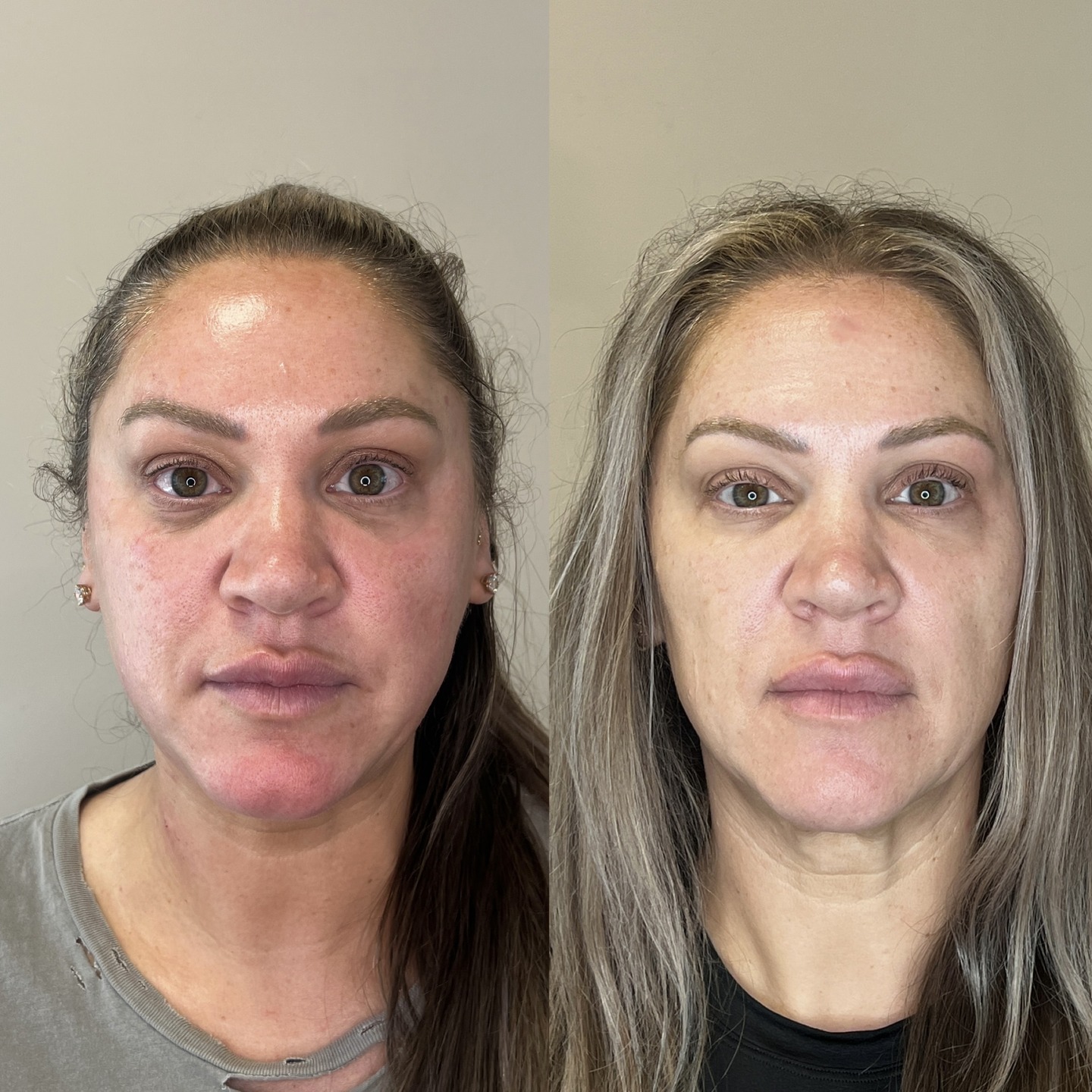
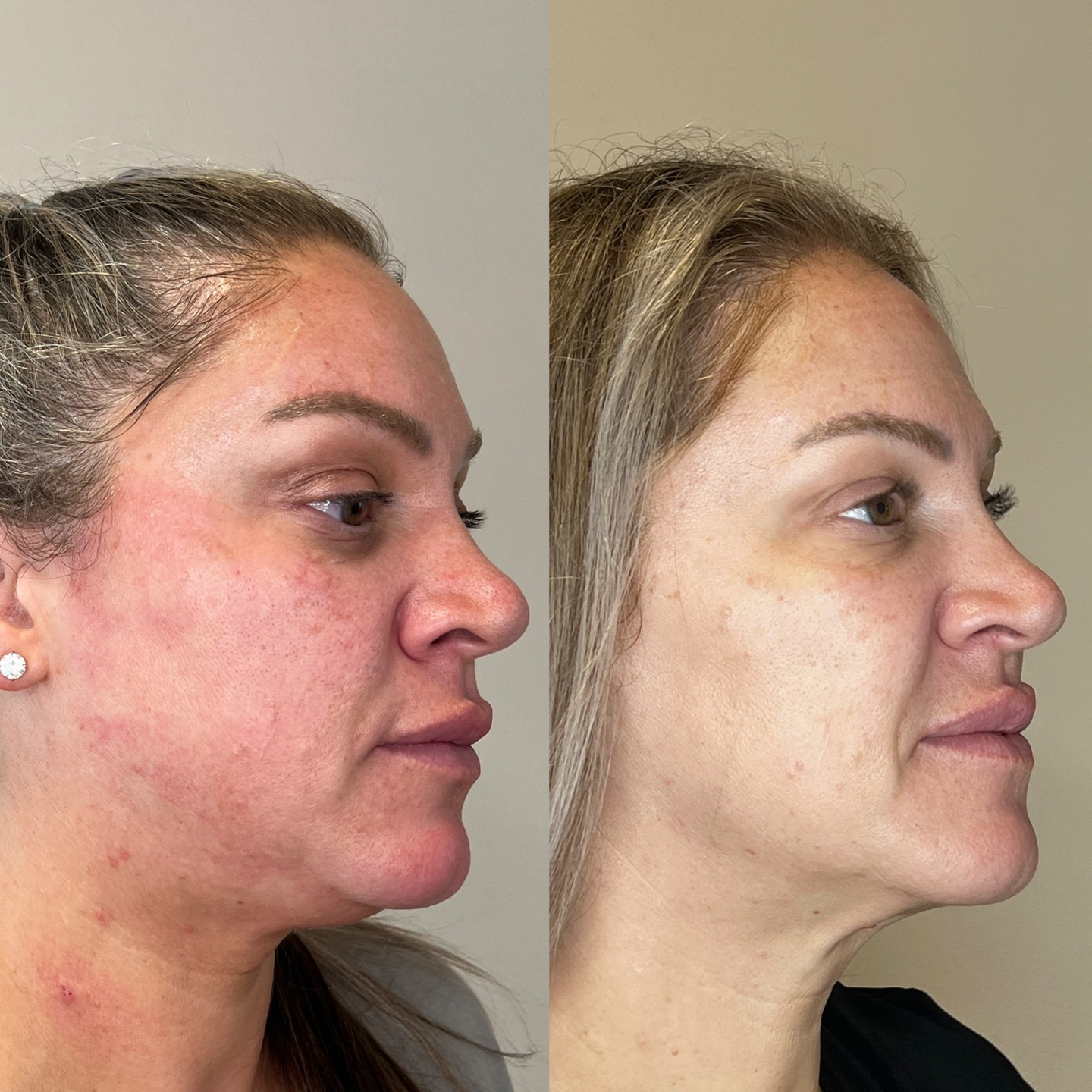
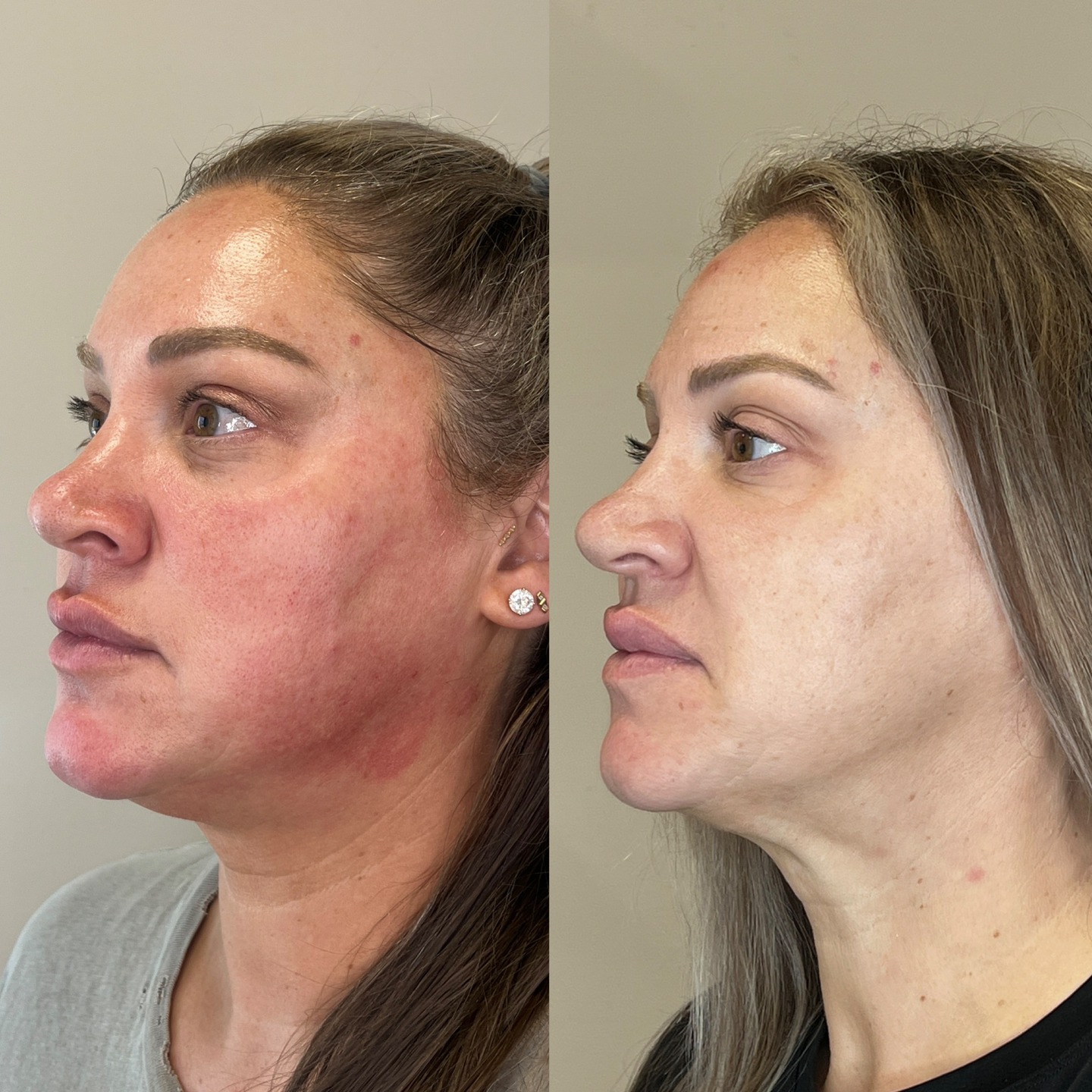
The photographs below show the same submitted comparison from three viewpoints: a front view, a profile facing right, and a profile facing left. Each image keeps the original side-by-side presentation, with before on the left and after on the right.
Compare GLOW Vials and the Autoinjector
Compare the declared ingredient amounts and product format. The 50 mg and 70 mg vials have different proportions; the autoinjector contains a preloaded solution.

GLOW Blend 50 mg
LYOPHILIZED BLENDThe 35 / 5 / 10 mg formula.
- GHK-Cu
- 35 mg
- BPC-157
- 5 mg
- TB-500
- 10 mg

GLOW Blend 70 mg
LYOPHILIZED BLENDThe 50 / 10 / 10 mg formula.
- GHK-Cu
- 50 mg
- BPC-157
- 10 mg
- TB-500
- 10 mg

GLOW Autoinjector
PRELOADED / 3 mL DEVICEThe ready-filled solution format.
- GHK-Cu
- 107 mg
- BPC-157
- 21.4 mg
- TB-500 (Thymosin β4)
- 21.4 mg
GLOW Before and After at Three Months
The duration provided for this photo set is three months. That describes the interval attached to this example, not a recommended cycle length or a promise that another person will see the same changes.
How quickly can changes appear?
This set contains starting and follow-up images, not weekly photographs. It therefore cannot show whether a visible difference first appeared in the first few weeks or closer to the three-month point.
What can be seen in this example?
The follow-up photographs show less prominent facial redness than the corresponding starting photographs. This is a description of the images, not a measurement of inflammation, collagen production or a percentage improvement.
For the ingredient research behind common claims, read the GLOW benefits article. Formulation and reported-protocol questions are covered separately on the dosage page.
Front View: Face and Skin Appearance
The front view shows the forehead, cheeks, nose and chin together. Redness is less prominent in the follow-up image, particularly across the cheeks and central face.
Profile Facing Right: Cheek and Jawline
This angle provides a closer view of the cheek and lower face. The follow-up photograph shows fewer prominent red areas across the visible cheek and jaw.
Profile Facing Left: The Opposite Angle
The opposite profile shows the other side of the comparison. The change in visible skin color can be viewed across the cheek and lower face without cropping away the surrounding context.
Does GLOW Really Work? What the Evidence Can Answer
Photographs show visual appearance. The ingredient studies below address different research questions; none evaluates this supplied photo set.
Collagen synthesis was studied in fibroblasts
Maquart and colleagues reported increased collagen synthesis in fibroblast cultures exposed to GHK-Cu. That is a laboratory result for an individual component, not a measurement of visible results from the finished GLOW blend.[6]
A clinical study did not show an objective added benefit
In a randomized post-laser study with 13 completers, skin-care regimens with and without topical GHK-Cu were compared. At 12 weeks, objective assessments found no significant between-group difference in wrinkles or overall skin appearance; a questionnaire favored the GHK-Cu group. It tested topical care after laser resurfacing, not injected GLOW.[7]
Repair-related findings do not establish a human recovery timeline
Chang and colleagues examined tendon explants and rat tendon-derived cells, reporting effects on outgrowth, survival under stress and migration. Those findings do not establish faster recovery after a cosmetic procedure or a human return-to-sport date.[10]
The practical distinction is between an ingredient's research background, an individual's observation and a controlled evaluation of the exact product. A before-and-after pair can contribute an observation; it cannot supply missing controls or convert one route of administration into another.
For scars or procedure-related recovery, document the procedure and other care as well as the appearance. A later photograph may be part of ordinary healing. Without a suitable comparison, the image cannot isolate the effect attributed to the blend.
See GLOW benefits and research for the broader ingredient review, and dosage information for the separate discussion of formulation and protocol claims.
How to Read Reviews and Judge Lasting Results
Separate delivery feedback, product-documentation feedback and an outcome claim. A positive review about shipping or packaging may be useful when evaluating a supplier, but it is not evidence of a change in skin or hair.
How long do results last?
A photograph taken on the final observation date cannot establish what happened afterward. A lasting-result claim needs further dated observations and a record of any changes in care. The material reviewed here does not establish a reliable duration for the complete GLOW blend.
Women, men and different starting points
We do not have a comparative GLOW dataset establishing a better response by sex or age. In the photo gallery, record the relevant starting condition and observation method rather than inventing separate expected timelines for women, men or people over 40.
Safety is a separate question
A favorable photo does not establish safety. FDA has identified limited human safety information and potential immunogenicity or impurity concerns involving BPC-157 and injectable GHK-Cu. Review the GLOW safety overview; personal treatment decisions belong with a licensed clinician.[11]
Know Which GLOW Product Is Being Discussed
A meaningful product record includes the actual formulation. The supplied 50 mg vial lists 35 mg GHK-Cu, 5 mg BPC-157 and 10 mg TB-500. The 70 mg vial lists 50 mg GHK-Cu, 10 mg BPC-157 and 10 mg TB-500. Those are different proportions, not just different container labels.[8, 9]
GLOW Blend 50 mg
LYOPHILIZED BLENDThe 35 / 5 / 10 mg formula.
- GHK-Cu
- 35 mg
- BPC-157
- 5 mg
- TB-500
- 10 mg
GLOW Blend 70 mg
LYOPHILIZED BLENDThe 50 / 10 / 10 mg formula.
- GHK-Cu
- 50 mg
- BPC-157
- 10 mg
- TB-500
- 10 mg
GLOW Autoinjector
PRELOADED / 3 mL DEVICEThe ready-filled solution format.
- GHK-Cu
- 107 mg
- BPC-157
- 21.4 mg
- TB-500 (Thymosin β4)
- 21.4 mg
The pen specification supplied for this project lists 107 mg GHK-Cu, 21.4 mg BPC-157 and 21.4 mg TB-500 per 3 mL. These rounded values total approximately 150 mg. This identifies the product; it does not demonstrate a faster or larger visible effect.[12]
Product analysis is not a before-and-after result
The supplied certificates report 99.70% and 99.72% RP-HPLC area purity for their named vial lots. Both identify the issuer as the manufacturer's in-house laboratory. They document analytical results, not wrinkle reduction, hair regrowth or a recovery rate.[8, 9]

Reported RP-HPLC area purity
In-house manufacturer reportCertificate PL-26-00042Open original COA ↗

Reported RP-HPLC area purity
In-house manufacturer reportCertificate PL-26-00043Open original COA ↗
Use Quality + COA and COA report library to review the records. For product selection, visit the Buy page; the pricing and purchasing information explains like-for-like comparisons. These research products are not offered here as self-treatment for a photo-based goal.
GLOW Peptide Before and After: FAQ
How long is the period shown in these photos?−
The supplied interval is three months. The gallery includes a front view and both profile views from this photo comparison.
Is three months the recommended GLOW cycle?−
No. Three months describes this submitted photo interval. It is not a dosing recommendation or an established cycle for every formulation.
Can the photos show when changes first started?−
No intermediate photographs are included in this set. The starting and follow-up images do not show the precise week when a visible change appeared.
Should everyone expect the same result after three months?−
No. A single supplied comparison cannot establish a typical result or a guaranteed timeline for other people.
Can results continue changing after the follow-up photo?−
The supplied set ends at the reported three-month point. It does not show what happened later or establish how long the visible differences lasted.
Are these three separate before-and-after cases?−
They are three angles of the supplied comparison: front, profile facing right, and profile facing left. They should not be counted as three independent outcome records.
Where can I compare the GLOW products?−
The Buy Online page shows the 50 mg vial, 70 mg vial and autoinjector. The Quality + COA page contains the original vial documentation.
Compare GLOW Products and Documentation
Choose the vial or preloaded format, review the specification and check the available batch records.
Commercial product information. For laboratory research use only; not a recommendation for personal treatment.
References and Product Documentation
The requested article supplies the topic and reported timeline. The additional sources below provide separately identified evidence checks. Product records establish specifications and analytical results, not before-and-after effectiveness.
- 6Maquart et al.: GHK-Cu and collagen synthesis in fibroblast culturesAdditional primary ingredient study; not a GLOW human trial
- 7Effects of topical copper tripeptide complex on CO2 laser-resurfaced skinAdditional randomized human topical study; not injectable GLOW
- 8GLOW Blend 50 mg: lot PL-2609-042, certificate PL-26-00042User-supplied in-house manufacturer COA; unchanged
- 9GLOW Blend 70 mg: lot PL-2609-043, certificate PL-26-00043User-supplied in-house manufacturer COA; unchanged
- 10Chang et al.: BPC-157 tendon outgrowth, survival and migrationAdditional primary tissue/cell study; not a human outcome trial
- 11FDA: Certain bulk substances that may present significant safety risksAgency safety information; limited to the stated substances and routes
- 12GLOW autoinjector composition and form supplied by the userSupplied specification screenshot; not outcome evidence
- PSupplied photo set
Three original side-by-side image files provided for this page. The accompanying editing brief reports a three-month interval. Photographs are reproduced without retouching.